Italian Wedding Cookies (Classic Butterball Style)

Italian Wedding Cookies (Classic Butterball Style)

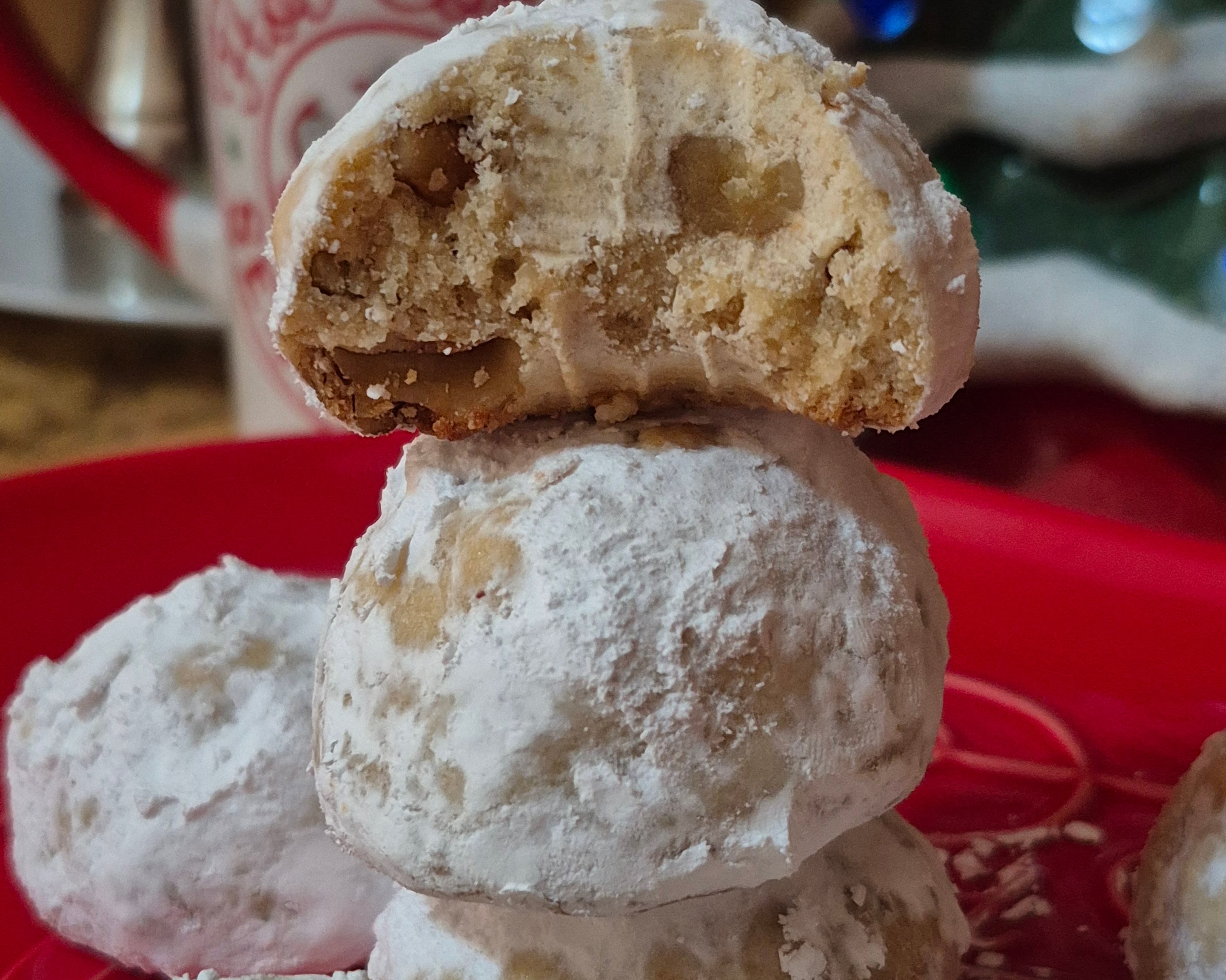
These traditional Italian Wedding Cookies are the kind of cookie you’ll find piled high on platters at weddings, holidays, and Sunday family gatherings. Simple, buttery, and dusted generously with powdered sugar, they practically melt the moment they hit your tongue.

They’re not flashy cookies — and that’s exactly the point. Made with just a handful of pantry ingredients, these cookies rely on good butter, proper balance, and gentle handling. This is the recipe I come back to year after year when I want something timeless and unmistakably Italian.

Things to know about Italian Wedding Cookies (Classic Butterball Style)

  • These cookies should not brown — pale equals tender.

  • Chilling the dough prevents spreading.

  • Rolling twice in powdered sugar gives that signature snowy finish.


Storage

  • Store in an airtight container at room temperature for up to 1 week.

  • They also freeze beautifully (uncoated). Roll in powdered sugar after thawing.


Final Note

Italian wedding cookies prove that the simplest recipes are often the most beloved. No nuts, no fuss — just buttery, delicate cookies that feel like a bite of celebration every time.

If you love classic Italian cookies like these, be sure to explore more of my favorites. From Italian amaretti cookies to traditional almond cantucci cookies, you’ll find plenty of old-world treats perfect for holidays, celebrations, or everyday baking.

👉 Browse all my Italian cookie recipes here.

Italian Wedding Cookies (Classic Butterball Style)

Servings:
Makes about 36–40 cookies (1-tablespoon size)

Prep Time:
15 minutes
(+ 30–45 minutes chilling time)

Cook Time:
12–14 minutes per batch

Total Time:
About 1 hour (including chilling)

Ingredients

  • 2 sticks (1 cup) unsalted butter, softened

  • 1 cup powdered sugar, plus more for rolling after baking

  • 1 tablespoon vanilla extract

  • 2¼ to 2½ cups all-purpose flour

  • 1 cup finely chopped walnuts
  • Pinch of salt (optional, but recommended if using unsalted butter

Instructions

  1. Cream the butter and sugar
    In a large bowl, beat the softened butter with the powdered sugar until light, fluffy, and pale — about 3-4 minutes.

  2. Add vanilla
    Mix in the vanilla extract until fully incorporated.

  3. Incorporate the flour
    Gradually add the flour (starting with 2¼ cups) and salt, mixing just until a soft dough forms.

    1. The dough should be tender and not sticky.

    2. If it feels too soft, add flour 1 tablespoon at a time.

  4. Mix in the walnuts until well combined

Chill the dough
Cover and refrigerate for 30–45 minutes. This helps the cookies hold their shape.

  1. Shape the cookies
    Scoop about 1 tablespoon of dough and roll into small balls.

  2. Bake
    Place on a parchment-lined baking sheet and bake at 350°F (175°C) for 12–14 minutes.
    The cookies should stay pale with just a hint of color on the bottom — do not overbake.

  3. Finish with powdered sugar
    Let cookies cool slightly, then roll generously in powdered sugar.
    For a classic look, roll them again once fully cooled


Ravioli Dolci di Ceci (Italian Fried Chickpea Pastries)

Ravioli Dolci di Ceci (Italian Fried Chickpea Pastries)

There are some Italian recipes that were never written down because they never needed to be. These are one of them. Growing up, I didn’t know what these were called — I don’t think my family really did either. They were simply i dolci di Natale, the sweet fried pastries that appeared around the holidays, usually when the oil was already hot and the kitchen smelled like citrus, cocoa, and sugar.

Only later did I learn that many Italian families made some version of these: a simple pasta frolla dough, filled with a sweet chickpea and cocoa mixture, folded like little ravioli, and fried until golden. It’s pure cucina povera ingenuity — turning humble pantry ingredients into something rich, comforting, and surprisingly elegant.

If chickpeas in dessert sound strange, trust me: you don’t taste them. They create a creamy, almost chestnut-like base that carries chocolate and orange beautifully. These are crisp on the outside, soft in the center, and even better the next day re crisped

Things to know about Ravioli Dolci di Ceci (Italian Fried Chickpea Pastri

  • You should not taste the chickpeas — they act as a creamy base, similar to chestnuts.
  • If the filling feels loose, add 1 tablespoon ground almonds, crushed amaretti, or fine breadcrumbs.
  • These keep well for 2–3 days, lightly covered at room temperature.
  • They’re even better the next day once the flavors settle.
  • Why You’ll Love This Recipe

  • Simple pantry ingredients
  • Deeply traditional and nostalgic
  • Perfect for holidays and special occasions
  • A beautiful example of Italian cucina povera
  • A Note From My Kitchen

    This is one of those recipes that reminds me why I love Italian food so much. It’s not about fancy ingredients — it’s about memory, practicality, and making something special from what you already have. If your family made something similar, chances are it didn’t have a name either — and that’s exactly what makes it special.

    If you try these, I’d love to hear what your family called them — or if they just appeared on the table like magic.

  • If you love traditional Italian holiday sweets, be sure to explore more of my favorites:


Ravioli Dolci di Ceci (Italian Fried Chickpea Pastries)

Servings & Timing

  • Servings: about 20–24 pastries
  • Prep Time: 45 minutes
  • Chill Time: 30 minutes
  • Cook Time: 15 minutes

Ingredients

  • Pasta Frolla (Sweet Pastry Dough)

  • 2 ½ cups (315 g) all-purpose flour
  • ½ cup (100 g) granulated sugar
  • ½ cup (113 g) unsalted butter, cold and cubed
  • 1 large egg
  • Zest of 1 lemon or orange
  • Pinch of salt

½ teaspoon vanilla extract (optional)

Chickpea Filling

  • 1 ½ cups cooked chickpeas, well-drained
  • ½ cup (100 g) granulated sugar
  • ¼ cup (25 g) unsweetened cocoa powder
  • Zest of 1 orange
  • ½ teaspoon ground cinnamon
  • ½ teaspoon vanilla extract
  • 2–3 tablespoons milk or espresso, added gradually
  • Pinch of salt
  • For Frying & Finishing

  • Neutral oil (vegetable or sunflower)
  • Powdered sugar, for dusting

Instructions

1. Make the Pasta Frolla

In a large bowl, combine the flour, sugar, and salt. Add the cold butter and rub it in with your fingertips until the mixture resembles coarse crumbs.

Add the egg, citrus zest, and vanilla. Gently bring the dough together just until it forms. Do not overwork.

Form into a disk, wrap tightly, and refrigerate for at least 30 minutes.

2. Prepare the Chickpea Filling

Dry the chickpeas very well with a kitchen towel. This is key to avoiding a loose filling.

Place the chickpeas in a food processor and process until very smooth, scraping down the sides as needed.

Add the sugar, cocoa powder, orange zest, cinnamon, vanilla, salt, and 2 tablespoons of milk or espresso. Process until thick and creamy. Add the remaining tablespoon only if needed.

The filling should be thick and spoonable, not loose. Chill for 20–30 minutes if needed.

3. Roll and Fill

You can roll the dough by hand with a rolling pin or use a pasta machine, both of which are traditional.

Rolling pin method: Roll the chilled dough very thin on a lightly floured surface — almost like ravioli dough. You should be able to see a faint shadow of your hand through it.

Pasta machine method: Divide the dough into manageable pieces. Flatten slightly, then pass through the pasta machine starting at the widest setting. Fold and pass through once or twice, then continue rolling thinner until you reach about setting 5–6, or just thinner than fresh pasta sheets.

Cut the dough into rectangles or circles. Place about 1 teaspoon of filling in the center of each.

Lightly moisten the edges with water, fold over, and press firmly to seal. Crimp with fingers or a fork. Trim edges neatly.


4. Fry

Heat oil to 350°F (175°C).

Fry pastries in batches, turning once, until golden brown — about 1–2 minutes per side.

Transfer to paper towels to drain.

5. Finish

Dust generously with powdered sugar while still warm.


Italian Hot Chocolate (Cioccolata Calda)

Italian Hot Chocolate (Cioccolata Calda)

Italian hot chocolate, or cioccolata calda, is rich, thick, and intensely chocolatey—nothing like the thin versions most of us grew up with. In Italy, it’s meant to be slowly enjoyed, often served with a spoon, and savored on cold days at a café or at home. Made with just a handful of simple ingredients, this traditional recipe delivers a smooth, velvety texture and deep chocolate flavor that feels both comforting and indulgent.

Things to know about  Italian Hot Chocolate (Cioccolata Calda)

  • Italian hot chocolate is meant to be thick and spoonable, not thin like American-style hot chocolate.

  • Using high-quality dark chocolate makes a noticeable difference in both flavor and texture.

  • Always whisk the cornstarch with cold milk first to avoid lumps and ensure a silky finish.

  • This recipe thickens quickly, so stir constantly and remove from heat as soon as it reaches the desired consistency.

  • If you make this Italian hot chocolate, leave a comment below and let me know how you enjoyed it. For the perfect pairing, serve it with one of my classic Italian cookies—Angel wings, , or Pizzicati Pinch Cookies. The rich, thick chocolate is especially delicious alongside crisp or nutty cookies. Be sure to click through to those recipes and explore more traditional Italian cookie favorites here on the blog.

Italian Hot Chocolate (Cioccolata Calda)

Servings

  • Serves 2

Cook Time

  • 5 minutes

(Prep time is minimal since everything is whisked and cooked in one saucepan.)

Ingredients

  • 2 cups whole milk

  • 3 ounces high-quality dark chocolate (70% cacao), finely chopped

  • 2 tablespoons unsweetened cocoa powder

  • 2 tablespoons granulated sugar

  • 1 tablespoon cornstarch

  • Pinch of salt

  • Instructions

  • In a small bowl, whisk the cornstarch with ¼ cup of the milk until completely smooth, creating a slurry. Set aside.

  • In a small saucepan over medium heat, add the remaining milk, cocoa powder, sugar, and salt. Whisk well until fully combined.

  • Warm the mixture until steaming but do not let it boil.

  • Add the chopped dark chocolate and stir until melted and smooth.

  • Whisk in the cornstarch slurry and continue cooking, stirring constantly.

  • Cook for 2–4 minutes, until the hot chocolate thickens to a rich, velvety, spoon-coating consistency.

  • Remove from heat and stir in vanilla or citrus zest, if using.

  • Serve immediately in small cups, just as it’s enjoyed in Italian cafés. Optional top with fresh whipped cream.


Angel Wing Cookies (Italian Fried Pastry)

Angel Wing Cookies (Italian Fried Pastry)

Angel wing cookies are one of those recipes that show up on Italian tables year after year, especially around Christmas and Easter. Light, crisp, and dusted generously with powdered sugar, they’re known by many names—chiacchiere, crostoli, frappe, bugie—depending on the region.

This version is made with a classic Italian pasta frolla–style dough, rolled paper-thin and fried until delicate and blistered. I like using my pasta machine to stretch the dough evenly, but a rolling pin works just as well—as long as you roll it extra thin. The thinner the dough, the lighter and crispier the cookies.

Things to know about this Angel Wing Cookies (Italian Fried Pastry)

  • These cookies rely on thin dough, not sweetness, for their signature light and crisp texture.
  • A pasta machine makes it easy to get the dough evenly thin, but a rolling pin works just as well if you take your time.
  • The cookies puff and blister quickly in the oil—this is exactly what you want.
  • They are best the day they’re made but keep well for several days in an airtight container.
  • Re-dust with powdered sugar just before serving for the prettiest finish.
  • Tips for Success

Roll thinner than you think: Thick dough will result in dense cookies. Thin dough gives you that light, shatteringly crisp texture.

Oil temperature matters: Too cool and the cookies absorb oil; too hot and they brown too quickly.

Storage & Freezing

Room Temperature: Store completely cooled angel wing cookies in an airtight container at room temperature for up to 5–7 days.

Do Not Refrigerate: Refrigeration introduces moisture and will soften the cookies.

Freezing Fried Cookies: These cookies are best enjoyed fresh and do not freeze well once fried, as they tend to lose their crisp texture after thawing.

  • Freezing the Dough: You can freeze the raw dough. Wrap it tightly in plastic wrap, then place in a freezer-safe bag for up to 2 months. Thaw overnight in the refrigerator, then bring to room temperature before rolling and frying.

If you try these angel wing cookies, I’d love to hear about it. Leave a comment below, rate the recipe, or tag me on Instagram so I can see your cookie tray. Be sure to explore the blog for more classic 10 Italian cookies you must make this  holiday , perfect for sharing with family and friends.

Angel Wing Cookies (Italian Fried Pastry)

Servings: About 6 dozen cookies
Prep Time: 30 minutes (plus 30 minutes resting)
Cook Time: 20–25 minutes

Ingredients

  • 3 cups all-purpose flour
  • 1/2  cup granulated sugar
  • 2 tablespoons unsalted butter, softened
  • 2 large eggs
  • 1/3 cup white wine or grappa
  • 1 teaspoon lemon zest
  • 1 teaspoon vanilla extract
  • 1 teaspoon baking powder
  • ¼ teaspoon salt
  • Vegetable or neutral oil, for frying
  • Powdered sugar, for dusting

Instructions

1. Make the Dough

In a large bowl, whisk together the flour, sugar, baking powder, and salt. Add the butter and rub it into the flour mixture with your fingertips until it resembles coarse crumbs.

Add the eggs, lemon zest, and vanilla. Mix until a dough forms, then knead briefly until smooth and supple, about 3–4 minutes. The dough should be firm but not sticky. If it feels dry, add a few drops of water; if sticky, dust lightly with flour.

Form into a disk, wrap tightly, and let rest at room temperature for 30 minutes.


2. Roll the Dough

Divide the dough into 4 pieces, keeping the portions you’re not working with covered.

Using a pasta machine:

  • Flatten one piece slightly and run it through the widest setting.
  • Continue passing it through the machine, reducing the thickness one notch at a time, until you reach setting 6 or 7 (very thin, almost translucent).

Using a rolling pin:

  • Roll the dough out on a lightly floured surface until it is paper-thin. You should almost be able to see through it.

    3. Cut the Cookies

    Using a fluted pastry wheel, cut the dough into rectangles or diamond shapes, about 2 x 4 inches. Cut a small slit in the center of each piece if desired (traditional but optional).

    Place the cut dough on a lightly floured surface and repeat with remaining dough.

    4. Fry

    Heat about 2 inches of oil in a deep skillet or Dutch oven to 350°F (175°C).

    Fry the cookies in batches, turning once, until puffed and lightly golden, about 30–45 seconds per side. Do not overcrowd the pan.

    Transfer to a paper towel–lined tray to drain.


    5. Finish

    Once completely cool, dust generously with powdered sugar.


Buccellato Siciliano – Traditional Christmas Fig & Nut Pastry Ring

Buccellato Siciliano – Traditional Christmas Fig & Nut Pastry Ring

Even though I’m from Northern Italy, I’ve grown to love and appreciate the beautiful traditions of the South—especially thanks to my Sicilian sister-in-law. Every Christmas, she brings a gorgeous Buccellato Siciliano, a stunning fig and nut pastry ring that fills the whole house with the aromas of honey, citrus, and warm spices. Watching her make it over the years inspired me to create my own version, honoring her family’s recipe while adding a touch of my northern Italian style. This festive pastry is rustic, impressive, and truly one of the most special holiday desserts to come out of Sicily.


Things to know about Buccellato Siciliano – Traditional Christmas Fig & Nut Pastry Ring

Buccellato is truly a labor of love—from soaking the figs to chopping the nuts and carefully mixing the sweet, spiced filling. Rolling out the dough, spreading the filling evenly, and shaping it into the signature ring takes patience, but every step adds to its incredible flavor and charm. This isn’t a recipe for rushing—it’s a holiday tradition, meant to be savored, shared, and enjoyed with family.

How to Cut for the Classic Look:
Once the ring is shaped and brushed with egg wash, use a sharp paring knife to create the traditional open slits. Start with long diagonal cuts evenly spaced around the ring, then add shorter slashes in between for a feathered effect. These cuts let the filling peek through during baking and give the Buccellato its iconic rustic, bakery-style appearance. Don’t worry about perfection—the charm is in its handmade look.

Making Buccellato is more than just baking; it’s a way to bring a little Sicilian holiday magic into your home.

Ready to bring a taste of Sicily to your holiday table? If you make this Buccellato Siciliano, be sure to leave a comment and rate the recipe — I love hearing how my readers bring these Italian traditions to life!
Share your beautiful pastry with me on Instagram by tagging @lorianasheacooks and don’t forget to check out my other festive Italian Christmas recipes here:


Buccellato Siciliano Christmas Fig & Nut Pastry Ring

Serves: 10–12
Difficulty: Medium
Time: About 2 hours (including chilling)

Ingredients

PASTRY DOUGH

  • 3 cups all-purpose flour

  • ½ cup sugar

  • 1 cup cold unsalted butter, cubed

  • 2 large eggs

  • 1 teaspoon vanilla extract

  • Zest of 1 orange

  • Pinch of salt

  • 1–2 tablespoons cold water (only if needed)

Make the dough:

  1. Mix flour + sugar + salt + orange zest.

  2. Cut in the cold butter until crumbly.

  3. Add eggs + vanilla.

  4. Knead just until smooth.

Wrap and chill 30 minutes.

FIG & NUT FILLING

  • 2 cups dried figs, chopped (soaked in Marsala 20–30 min, drained)

  • ¾ cup raisins

  • 1 cup walnuts, chopped

  • 1 cup pistachios, chopped

  • ½ cup almonds, chopped

  • ½ cup candied orange peel (cedro), chopped

  • ½ cup honey

  • ⅓ cup sugar

  • Zest of 1 orange

  • 1 teaspoon cinnamon

  • ½ teaspoon clove

  • 2–4 tablespoons Marsala or the soaking liquid (optional, only if the mixture is too thick)

Make the filling:

  1. Combine the soaked figs, raisins, nuts, candied orange peel.

  2. Add honey, sugar, cinnamon, clove, and orange zest.

  3. Pulse a few times in a food processor OR mix by hand for a chunkier filling.

  4. Add a spoonful of the Marsala soaking liquid only if you need to loosen it.

Filling should be thick, sticky, and spreadable — not wet.

ASSEMBLE

  1. Roll chilled dough into a large rectangle (about ¼-inch thick).

  2. Spread the filling evenly, leaving a border.

  3. Roll the dough up like a jelly roll.

  4. Form into a ring and pinch ends to seal.

  5. Make small decorative cuts on top (the traditional “Sicilian feathering”).

  6. Brush with egg wash.


BAKE

  • 350°F (175°C)

  • 35–45 minutes, until deeply golden.

  • DECORATE (OPTIONAL)

  • Warm apricot jam + a splash of water and brush over the top

  • Add candied fruit or pistachios

  • Dust with powdered sugar


10 Italian Christmas Cookies You Must Bake

10 Italian Christmas Cookies You Must Bake

Celebrate the season with these classic Italian cookies that bring warmth, tradition, and a touch of sweetness to your table.

Christmas in Italy isn’t complete without cookies — each bite carries memories, traditions, and a little magic. Over the years, I’ve shared many of my favorite Italian cookies on the blog, and today I’m rounding up 10 must-bake Italian Christmas cookies that are perfect for gifting, freezing, or enjoying with a cup of espresso.

 1. Italian Amaretti cookies 

Crispy on the outside, soft and chewy inside, these almond-flavored cookies are a classic. Perfect with coffee or a glass of Vin Santo.

2. Italian lemon knot cookies

These soft and zesty Italian lemon knot cookies are one of my favorites. Bright with fresh lemon, dipped in a sweet lemon glaze and full of delicious flavor.


3. Pizzicati Pinch Cookies

Jam-filled, tender cookies with a perfect pinch of sweetness. They’re fun to make and look adorable on a holiday platter.


4. Chocolate Walnut Holiday Cookies

Rich, spiced, and studded with walnuts, these cookies are deeply chocolatey and festive — a crowd favorite.


5. lemon Ricotta Cookies

Soft, lightly sweet, and aromatic with lemon  zest, these cookies are perfect for a winter morning treat or gift tins.


6. Tuscan Bullseye Cookies

Named for their beautiful round design with jam in the center, these cookies are as charming as they are delicious.


7. Italian Almond cantucci Cookies

A simple, classic cookie that’s nutty, slightly chewy, and perfect for dipping into coffee or dessert wine.

8. Italian Pizzelle cookies

No Italian Holiday is without  these crisp, thin, buttery Italian  Pizzelle Cookies. Delicate, thin, wafer like this recognizable Italian cookies aren’t baked in the oven, they get their shape by pressing the  batter between the hot Pizzella Iron 


9. Italian rainbow Christmas cookies

Italian rainbow Christmas cookies , also known as tricolor cookies, are a delicious festive cookie that blends flavor, color and tradition. These iconic treats, often associated with Italian – American bakeries, are not actually cookies in the traditional sense but rather delicate almond sponge cakes layered with sweet jam.

10.  Gluten- free  Italian walnut cookies

I didn’t think gluten free and Italian cookies could be in the same sentence.  Not only are these Italian walnut cookies gluten free, there is no flour or butter in these nutty cookies. Recipe

Tips for a Successful Italian Christmas Cookie Season

  • Bake in batches and freeze: Many Italian cookies freeze beautifully for up to 3 months.

  • Mix flavors and textures: Include chewy, crisp, nutty, and chocolatey cookies for variety.

  • Gift with love: Wrap cookies in parchment and tins for a beautiful homemade present.

  • Start early: December flies by — freezing cookies allows you to enjoy the month without stress.


Crema Pasticcera – Italian Pastry Cream Recipe

 Crema Pasticcera – Italian Pastry Cream Recipe

Crema pasticcera  Italian pastry cream is the heart of so many beloved Italian desserts — a smooth, glossy custard that’s rich but never heavy, sweet but not overly so, and endlessly versatile. Growing up around Italian kitchens and bakeries, this was the first “fancy” cream I learned to make, even before mastering pie dough. It shows up everywhere: layered in cakes, tucked inside pastries, dolloped into fruit tarts, and folded into whipped cream for a dreamy diplomat filling.

This recipe is simple, deeply traditional, and the one I return to every single time. It’s made with just a handful of staples you probably already have in your kitchen, and when cooked low and slow, it becomes the silkiest custard imaginable. Perfect for everyday desserts or any special occasion.

Things to know about this  Crema Pasticcera  Italian Pastry Cream Recipe

Tips for Perfect Crema Pasticcera

  • Low heat is everything — slow and steady prevents lumps.

  • Whisk constantly to keep the texture smooth.

  • Strain it if you see even a hint of curdling.

  • Use whole milk for richness and stability.

  • Chill it properly before using in filled pastries.


Serving & Variations

  • Fill cornetti, bomboloni, or cream puffs

  • Layer inside sponge cakes

  • Spoon into fruit tarts

  • Fold with whipped cream for crema diplomatica

  • Add cocoa powder to make crema al cioccolato

  • Add espresso for a mocha version

  • Storage

  • Store in an airtight container with plastic wrap pressed on the surface.

  • Keeps 3–4 days in the refrigerator.

  • Do not freeze — the texture will separate.

  • Ready to use your crema pasticcera? Try filling some of my favorite Italian desserts: classic Zeppole  fried Italian doughnuts or my Christmas cream puffs and it’s delicious in my Lemon Italian sponge cake

Crema Pasticcera Italian Pastry Cream recipe

Servings: About 2 cups (fills 1 tart or 12–16 pastries)
Cook Time: 10 minutes
Total Time: 20 minutes

Ingredients

  • 2 cups (480 ml) whole milk

  • Zest of 1 lemon (remove in wide strips for easy removal)

  • ½ vanilla bean, split or 1 teaspoon vanilla extract

  • 4 large egg yolks

  • ½ cup (100 g) granulated sugar

  • ¼ cup (30 g) cornstarch

  • 2 tablespoons (28 g) unsalted butter, cut into pieces

Instructions

  1. Warm the milk: In a saucepan, heat the milk with the lemon zest until just steaming. Remove from heat and let it infuse.

  2. Whisk the base: In a bowl, whisk egg yolks and sugar until pale and thick. Add the cornstarch and whisk until smooth.

  3. Temper: Slowly pour the warm milk into the yolk mixture, whisking constantly to prevent scrambling.

  4. Cook to thicken: Return everything to the saucepan and cook over medium-low heat, stirring nonstop, until thick, glossy, and creamy.

  5. Finish: Off the heat, strain if needed, then stir in the butter and vanilla.

  6. Chill: Cover with plastic wrap touching the surface and chill until fully cooled.


Classic Zeppole Italian Fried Doughnuts

Classic Zeppole Italian Fried Doughnuts

These classic zeppole are the ultimate Italian fried doughnuts — light, airy, and golden, with a delicate crisp outside and a soft, pillowy inside. Made from a choux-style dough (similar to cream puffs), they’re simple to make yet irresistibly nostalgic. Dusted with powdered sugar, they bring a taste of Italian celebrations and street fairs right to your kitchen. Perfect for dessert, breakfast, or anytime you crave something sweet and comforting.

Things to know about this Classic Zeppole Italian Fried Doughnut recipe

  • Zeppole are best served fresh and warm, straight from the fryer.

  • The dough is choux-style, similar to cream puffs, so it’s light and airy.

  • You can shape them as round balls or classic rings using a piping bag.

  • Oil temperature matters: keep it around 350°F (175°C) to ensure they puff up and cook evenly.

  • Zeppole are delicious on their own with powdered sugar, or you can fill them with pastry cream, custard, or ricotta for a special treat.

  • Leftovers can be reheated in a 350°F oven for a few minutes, but they’re always best fresh.

Love Italian desserts? Try more sweet treats from the blog like Lemon Ricotta cookies or Italian lemon knot cookies — your next homemade Italian indulgence is just a click away!

Classic Zeppole Italian Fried Doughnuts

Servings: 12–16 zeppole
Prep Time: 15 minutes
Cook Time: 20 minutes
Total Time: 35 minutes

Ingredients

    • 1 cup water

    • 1/2 cup milk
    • 4 tablespoons unsalted butter

    • 2 tablespoons sugar

    • zest from 1 lemon
    • ¼ teaspoon salt

    • 1 cup all-purpose flour

    • 4 large eggs

    • Oil for frying (vegetable or peanut)

    • Powdered sugar, for dusting
      INSTRUCTIONS

    • Heat the liquid:
      In a medium saucepan, combine water, butter, sugar, lemon zest and salt.
      Bring to a simmer over medium heat until the butter is fully melt
    • Add the flour:
      Add the flour all at once and stir vigorously with a wooden spoon.
      Cook for 1–2 minutes, until the dough pulls away from the sides and forms a smooth ball.
      (This cooks out the raw flour taste.)
    • Cool the dough slightly:
      Transfer the dough to a mixing bowl and let it cool for 5 minutes so it doesn’t cook the eggs.

    • Add the eggs:
      Add the eggs one at a time, mixing well after each addition.
      The dough should become smooth, glossy, and pipeable — similar to cream puff dough.

    • Heat the oil:
      In a deep pot, heat oil to 350°F (175°C).

    • Form the zeppole:

      • For round zeppole: Drop spoonful’s of dough directly into the oil.

      • For ring-shaped zeppole: Pipe dough onto small parchment squares, then lower into the oil and peel off the paper.

    • Fry until puffed and golden:
      Fry in batches for 3–4 minutes per side, or until deeply golden and fully puffed.
      Make sure not to overcrowd the pan.

    • Drain:
      Remove to a paper towel–lined tray to drain excess oil.

    • Finish:
      Dust generously with powdered sugar and serve warm.


Easy Cannoli Cake with Ricotta Mascarpone Frosting

Easy Cannoli Cake with Ricotta Mascarpone Frosting

This Cannoli Cake started as a little kitchen experiment inspired by one of my favorite Italian desserts — the classic Sicilian cannoli. I wanted all that creamy ricotta flavor, a hint of cinnamon, and those sweet little chocolate chips, but in a simple, homemade cake that didn’t require frying shells or piping filling. So I baked a basic yellow cake — soft, buttery, and lightly sweet — and layered it with a rich ricotta mascarpone frosting that doubles as the filling.

The idea comes straight from Sicily, where cannoli were first created centuries ago as a special treat during Carnevale — a time of celebration and abundance before Lent. The traditional version uses crispy pastry shells filled with sweet ricotta cream, often flavored with orange zest, cinnamon, and chocolate. When Italian immigrants brought their beloved cannoli to America, bakers started finding new ways to enjoy those same flavors — and that’s how Cannoli Cake was born.

It’s a modern Italian-American twist on a Sicilian classic, combining all the familiar flavors of the original dessert in a soft, moist layer cake that’s perfect for birthdays, holidays, or Sunday dinners. Each bite tastes like home — creamy, comforting, and unmistakably Italian.

Things to know about this Easy Cannoli Cake with Ricotta Mascarpone Frosting

This Cannoli Cake is best made with well-drained ricotta — if your ricotta is watery, place it in a fine mesh sieve or cheesecloth overnight to remove excess liquid. This ensures the frosting stays thick, creamy, and easy to spread between the cake layers.

For the most authentic texture, sprinkle the mini chocolate chips between the layers and on top of the frosting instead of mixing them into the filling. This gives every bite a little crunch without weighing down the creamy filling.

Chilling the cake for at least 1 hour after assembling helps the frosting set and makes slicing cleaner, especially if you want neat, even layers. The cake keeps beautifully in the refrigerator for up to 3 days, making it a perfect make-ahead dessert for parties or holiday gatherings. Bring it to room temperature for 15–20 minutes before serving to enjoy the full creamy texture and flavor.

For a little extra flair, try sprinkling chopped pistachios on top or a light drizzle of chocolate sauce just before serving — it makes the cake look bakery-perfect without any extra effort.

If you love classic Italian desserts with a modern twist, be sure to try my Crostata Italian jam tart or Amaretti Cookies next — both pair perfectly with a slice of this Cannoli Cake and a cup of espresso!


Easy Cannoli Cake with Ricotta Mascarpone Frosting

Servings: 10–12 slices
Prep Time: 25 minutes
Cook Time: 35–40 minutes
Chill Time: 1 hour
Total Time: 2 hours

Ingredients

For the Yellow Cake:

    • 2 ½ cups all-purpose flour

    • 2 ½ tsp baking powder

    • ½ tsp salt

    • ¾ cup unsalted butter, softened

    • 1 1/2 cups granulated sugar

    • 4 large eggs, room temperature

    • 1 cup whole milk, room temperature

    • 1 tbsp vanilla extract

      For the Cannoli Frosting (used for both filling and topping):

      • 1 ½ cups whole milk ricotta, drained overnight if watery

      • 1 cup mascarpone cheese (or cream cheese for a firmer texture)

      • 1 cup powdered sugar

      • 1 tsp vanilla extract

      • ½ tsp ground cinnamon

      • ½ cup mini chocolate chips (plus extra for garnish)

      • 💡 Baking Tip: How to Get a Tall, Sliceable Cake

        For that beautiful bakery-style Cannoli Cake with two thick layers, bake the batter in one 9-inch round cake pan with high sides (at least 2½–3 inches deep). You can also use an 8-inch round pan that’s 3 inches deep for an even taller result — just extend the baking time to about 45–50 minutes, checking with a toothpick at 40 minutes.

        Once baked, cool the cake completely, then chill it for 30 minutes before slicing it horizontally. This helps the cake stay firm and gives you a clean, even cut for layering with the creamy cannoli filling.

Instructions

    1. Preheat oven:
      Set oven to 350°F (175°C). Grease and flour one 9-inch round cake pan (or two 8-inch if you prefer thinner layers).

    2. Make the yellow cake:
      In a bowl, whisk together flour, baking powder, and salt.
      In a large bowl, cream the butter and sugar until light and fluffy, about 3 minutes.
      Beat in eggs one at a time, then stir in vanilla.
      Add the dry ingredients alternately with the milk, beginning and ending with the dry mixture.
      Pour the batter into the prepared pan and bake for 35–40 minutes, or until a toothpick comes out clean.
      Cool completely, then slice the cake horizontally in half to create two layers.

    3. Make the cannoli frosting:
      In a mixing bowl, beat ricotta, mascarpone, powdered sugar, vanilla, and cinnamon until smooth and creamy.
      3. Assemble the cake:
       Place the bottom half of the cake on a serving plate and spread a thick layer of the frosting. Sprinkle haft the chocolate chips over the filling.
      Add the top cake layer and spread the remaining frosting all over the top and sides.
      Decorate with the remaining mini chocolate chips (and chopped pistachios for color optional)

    4. .Chill before serving:
      Refrigerate for at least 1 hour before slicing to help the frosting set


Peach Tart with Lattice Crust – Italian Crostata

 Peach Tart with Lattice Crust – Italian Crostata

If you saw my Instagram recently, you caught a glimpse of this golden, lattice-topped peach crostata—and now I’m sharing the full recipe! This rustic Italian jam tart, baked in a 9-inch tart pan, pairs juicy fresh peaches with sweet peach jam for a dessert that’s as delicious as it is beautiful. The lattice top adds a touch of classic charm, making it perfect for summer gatherings, brunch, or any special occasion. Follow along to learn how to make this simple yet stunning homemade peach tart from scratch.

Things to know about this Peach Tart with Lattice Crust – Italian Crostata

  • Rustic & Elegant: The lattice top gives it a charming, rustic look while still looking impressive for guests.

  • Fresh & Jammy: Combines fresh peach slices with sweet peach jam for a layered, flavorful filling.

  • Easy to Make: No special equipment needed—just a 9-inch tart pan and basic kitchen tools.

  • Perfect for Any Occasion: Great for summer desserts, brunch, or as a sweet centerpiece for gatherings.

  • Make Ahead Friendly: Can be baked in advance and served at room temperature; keeps well for 1–2 days.

  • Customizable: Swap peaches for seasonal fruits like plums, apricots, or berries.

  • Italian-Inspired: A classic rustic crostata style that’s simple yet authentically Italian.

  • “If you enjoy this peach crostata, you’ll love my other rustic desserts too—don’t miss the Italian Crostata jam tart and Plum Cake recipes for more homemade Italian sweetness!”

Ingredients

  • Traditional Peach Crostata with Lattice Top

    Servings: 8–10
    Prep Time: 25 minutes
    Bake Time: 35–40 minutes
    Total Time: 1 hour

    • 2 cups all-purpose flour (plus more for work surface)

    • 2 tsp baking powder

    • 1 cup granulated sugar

    • 1 stick (½ cup) unsalted butter, softened

    • 2 large eggs

    • 1 tbsp vanilla extract

    • Juice and zest of 1 lemon

    • 2 cups peach jam

    • 2 fresh peaches, thinly sliced

Instructions

    1. Preheat oven to 350°F (175°C). Grease or line a 9-inch tart pan with parchment paper.

    2. Make the dough:

      • In a large bowl, combine flour, baking powder, and sugar.

      • Cut in the cold butter until the mixture resembles coarse crumbs.

      • Make a well in the center, add eggs, vanilla, lemon juice, and zest and whisk. Start to incorporate in the dry ingredients. Then transfer to a lightly floured smooth surface and knead the dough to a smooth consistency (3-4 minutes) cover the dough and let it rest for 30 minutes for easier rolling.

    3. Roll out dough for base:

      • Roll out 2/3 of the dough into a circle slightly larger than 9 inches.

      • Carefully press into the tart pan, letting the edges hang slightly over the rim.

    4. Add the filling:

      • Spread peach jam evenly over the dough, leaving a 1-inch border.

      • Arrange fresh peach slices on top of the jam.

    5. Create the lattice top:

      • Roll out the remaining 1/3 of dough into 10 thin strips.

      • Lay strips over the filling in a crisscross pattern.

      • Fold the edges of the base dough over the lattice strips, pressing gently.

    6. Bake:

      • Brush the dough edges and lattice with a little beaten egg for a golden finish.

      • Bake 35–40 minutes, or until crust is golden and filling is bubbly.

    7. Cool & serve:

      • Let the crostata cool in the tart pan for 15–20 minutes before slicing.

      • Serve warm or at room temperature, optionally with vanilla gelato or whipped cream.