Traditional Southern Italian Cavatelli
Traditional Southern Italian Cavatelli
This post may contain affiliate links, that help support this blog. If you make a purchase through these links, I may earn a commission—at no cost to you. For more information read my disclosure policy.
What Are Cavatelli?
Cavatelli are small shell-shaped pasta traditionally made with semolina flour and water. The name comes from the Italian word cavato, meaning “hollowed.”
Unlike northern egg pastas, Southern Italian pasta is typically made without eggs because semolina wheat was abundant and durable in warmer climates. That’s why this dough is simple — and perfect.
There’s something sacred about making pasta by hand. before mixers. before attachments. before shortcuts. it was just semolina flour, warm water, and your hands.
Cavatelli are one of the oldest and most beloved pastas from Southern Italy. They’re small, rustic, slightly chewy, and designed to catch sauce in that beautiful little hollow. In many Southern Italian homes, this wasn’t “fancy Sunday pasta.” This was everyday pasta — made on a wooden board, shaped with two fingers, and served with whatever was growing or simmering nearby. No eggs. No fuss. Just tradition.
And once you make them once, you’ll never be intimidated again.
Things to know about this Traditional Southern Italian Cavatelli recipe
Good to Know
-
Fresh cavatelli freeze beautifully. Freeze on a tray first, then transfer to a bag. Cook from frozen — do not thaw.
-
This pasta is meant to be slightly chewy (al dente), not soft like egg noodles.
-
If your pasta feels too dense, your dough may have been too dry.
-
If it falls apart, it may have had too much water.
How to Serve Cavatelli
Cavatelli pair beautifully with:
-
Broccoli or broccoli rabe
-
Italian sausage
-
Simple tomato sauce
-
Garlic and olive oil
-
Butter and sage
One of the most classic pairings is:
Cavatelli e Broccoli — a Southern Italian staple.
Now that you’ve mastered homemade cavatelli, it’s time to put them to work.
Make a full Southern Italian classic with my Cavatelli with Broccoli Rabe & Italian Sausage , or keep it simple with a rustic cacio and pepe Pasta
If you love traditional pasta recipes, don’t miss my Lasagna Bolognese and Authentic fettuccine alfredo (no cream) for more authentic Italian cooking inspiration.
Cook it. Taste it. Make it your own.
And if you make this recipe, leave a comment and tell me how your cavatelli turned out — I read every one.
Store leftover cavatelli with broccoli rabe and Italian sausage in an airtight container in the refrigerator for up to 3 days.
For best results, reheat gently in a skillet over medium-low heat with a splash of water or broth to loosen the sauce. Freshly made cavatelli can also be frozen before cooking for up to 2 months. Cook directly from frozen, adding a few extra minutes to the cooking time.
How to Freeze Homemade Cavatelli
Arrange the uncooked cavatelli in a single layer on a lightly semolina-dusted baking sheet, making sure the pieces aren’t touching. Place the baking sheet in the freezer for 1–2 hours, or until the cavatelli are completely firm.
Transfer the frozen cavatelli to a freezer-safe bag or airtight container. Label and date, then freeze for up to 2 months.
When ready to cook, do not thaw. Drop the frozen cavatelli directly into a large pot of salted boiling water. They may take a few minutes longer to cook than fresh cavatelli. Cook until tender and chewy, then drain and toss with your sauce.
Traditional Southern Italian Cavatelli
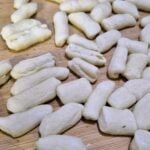
Traditional Southern Italian cavatelli are small, hand-shaped pasta made with semolina flour and water. Their ridged, slightly chewy texture makes them perfect for holding onto hearty sauces, from simple tomato sauce to sausage and broccoli rabe.
Cavatelli Dough
- 2 cups fine semolina flour (semola rimacinata preferred)
- ¾–1 cup warm water
- Pinch of salt (optional)
Cavatelli with Broccoli rabe & Italian sausage
- 1 lb cavatelli pasta
- 1 large head broccoli (cut into small florets)
- 3-4 cloves garlic, sliced
- ¼–½ tbsp red pepper flakes
- ⅓ cup extra virgin olive oil
- salt
- Freshly grated Pecorino Romano
- 2 links Italian sausage (sweet or hot) casings removed
How to Make Cavatelli Dough
-
Form the Dough
Place the semolina flour on a wooden board or in a large bowl. Make a well in the center.
Slowly add warm water while mixing with a fork or your fingers until a shaggy dough forms.
-
Knead
Knead for 8–10 minutes until smooth and firm.
The texture should feel like: Firm play-dough
Smooth but not sticky Elastic but not soft
If too dry → add a few drops of water., If sticky → dust lightly with semolina.
-
Rest
Cover with plastic wrap or a towel and let rest 15 -20 minutes.
Resting relaxes the gluten and makes shaping easier.
How to Shape Cavatelli
- Cut off a portion of dough. Keep the rest covered.
- Roll into a rope about ½-inch thick.
- Cut into ½-inch pieces.
- Using two fingers, press and drag the dough toward you to create the hollow center.
-
You can:
Leave them smooth (very traditional)
Use a gnocchi board for ridges
- Lightly dust with semolina as you work.
How to Cook Fresh Cavatelli
-
Bring a large pot of heavily salted water to a boil.
-
Add pasta and cook:
4–6 minutes total
They will float early, but continue cooking until tender
-
Always taste one before draining.
-
An easy, traditional way to serve cavatelli is simple, rustic, and full of flavor — just like it’s done in Southern Italy. Here’s a classic you’ll love 👇
Cavatelli with Broccoli rabe and Italian sausage
-
Bring a large pot of salted water to a boil. Add the broccoli rabe first and cook 3–4 minutes.
Add the cavatelli to the same pot and cook until al dente. Reserve ½ cup pasta water before draining.
-
In a large skillet, heat olive oil over medium-low. Add the Italian sausage and red pepper flakes. Cook until sausage is browned add the garlic and cook until fragrant .
-
Combine
Add drained pasta and broccoli to the skillet. Toss well. Add a splash of reserved pasta water to help create a light sauce.
-
Finish
Taste for salt. Top with freshly grated Pecorino Romano and a drizzle of olive oil.