Italian Ground Beef and Ricotta Stuffed Shells

Thanksgiving Turkey: How to Thaw, Season & Roast It


Thanksgiving Turkey: How to Thaw, Season & Roast It
This post may contain affiliate links, that help support this blog. If you make a purchase through these links, I may earn a commission—at no cost to you. For more information read my disclosure policy.

Thanksgiving may not be a traditional holiday in Italy, but gathering around the table with family and sharing a homemade meal is something I grew up understanding and loving. When I moved to America, Thanksgiving quickly became one of my favorite holidays, especially because it reminded me of those long Italian family meals where the food keeps coming and nobody is in a hurry to leave the table.
And at the center of so many American Thanksgiving celebrations is the turkey.
Cooking a Thanksgiving turkey can feel intimidating, especially if you’re hosting the holiday or preparing a whole turkey for the first time. But with a little planning and a few simple techniques, you can make a beautiful, flavorful roast turkey with golden skin and juicy, tender meat.
In this guide, I’m sharing everything you need to know to prepare your Thanksgiving turkey, from safely thawing a frozen bird to seasoning it, roasting it to perfection, and knowing when it’s ready to serve. I’ll also share practical tips to help you avoid common mistakes and make the process easier, so you can spend less time worrying about the turkey and more time enjoying the holiday with family and friends.
Whether you’re making your first Thanksgiving turkey or looking to improve your usual method, this guide will help you prepare a centerpiece your family will look forward to every year.
How to Plan Ahead for Thanksgiving Turkey
The secret to a stress-free Thanksgiving turkey is giving yourself enough time. The size of your bird determines how long it needs to thaw and roast, so planning ahead makes all the difference.
Before you begin, check the weight of your turkey, make sure you have enough refrigerator space for thawing, and gather your roasting pan, thermometer, and seasonings.
Here’s a simple timeline to follow:
- Several days before Thanksgiving: Begin thawing your frozen turkey in the refrigerator. Larger turkeys need more time.
- 1–2 days before: Prepare any compound butter, herb mixtures, or other seasonings you plan to use.
- The day before: Check that the turkey is fully thawed. If you’re using a dry brine, season it according to your recipe and keep it refrigerated.
- Thanksgiving Day: Prepare and roast the turkey, allowing enough time for cooking and resting before carving.
The most important tip is not to leave thawing until the last minute. A frozen turkey can take several days to thaw safely, and a partially frozen bird can interfere with even cooking.
How to Safely Thaw a Frozen Turkey
If you’re starting with a frozen turkey, the safest and easiest method is to thaw it in the refrigerator. Keep the turkey in its original packaging and place it on a rimmed tray or in a pan to catch any liquid.
Allow approximately 24 hours of refrigerator thawing for every 4–5 pounds of turkey. Keep your refrigerator at 40°F or below, and place the turkey on the bottom shelf to prevent drips from contaminating other foods.
As a general guide:
- 8–12 pounds: 2–3 days
- 12–16 pounds: 3–4 days
- 16–20 pounds: 4–5 days
- 20–24 pounds: 5–6 days
These are estimates, so allow extra time when possible. Once thawed, a turkey can generally remain refrigerated for another 1–2 days before cooking.
Important: Never thaw a turkey on the kitchen counter. If you’re short on time, you can use the cold-water method, keeping the turkey in leakproof packaging and changing the water every 30 minutes. Cook it immediately after thawing.

The Star of the Show: My Best Holiday Turkey
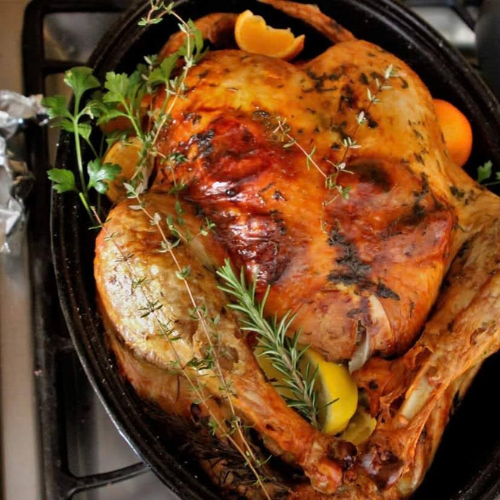
Every Thanksgiving table deserves a beautiful roast turkey, and my Best Holiday Turkey is one I look forward to making year after year. Roasted with garlic, fresh herbs, and plenty of butter, it’s flavorful, golden on the outside, and juicy and tender inside.
Although turkey wasn’t something we traditionally cooked in Italy, I’ve come to appreciate how it brings everyone together, much like a beautiful Italian Sunday roast. The aroma of garlic and herbs fills the kitchen as the turkey roasts, and everyone starts gathering around, waiting for that first delicious slice.
If you’re making a Thanksgiving turkey this year, a little preparation goes a long way. Use the roasting guide below as a starting point, but always check the internal temperature with a reliable meat thermometer to make sure your turkey is safely cooked.
Thanksgiving Turkey Roasting Time and Temperature Guide
Oven temperature: Roast your turkey at 325°F in a conventional oven. This moderate temperature allows the turkey to cook evenly while the skin turns beautifully golden.
How Long to Roast a Turkey
Use these times as estimates for an unstuffed turkey. The actual cooking time will depend on the bird’s size, whether it’s fully thawed, and your oven.
| Turkey weight | Estimated roasting time |
|---|---|
| 8–12 pounds | 2¾–3 hours |
| 12–14 pounds | 3–3¾ hours |
| 14–18 pounds | 3¾–4¼ hours |
| 18–20 pounds | 4¼–4½ hours |
| 20–24 pounds | 4½–5 hours |
A stuffed turkey generally takes longer to roast. For food safety and more reliable results, I recommend cooking the stuffing separately. If you do stuff your turkey, the center of the stuffing must also reach 165°F.
Tips for a Juicy, Flavorful Roast Turkey
- Use a meat thermometer. Check the thickest part of the breast and the innermost parts of the thigh and wing, avoiding the bone. All must reach at least 165°F for food safety.
- Let the turkey rest. Allow it to rest for about 20–30 minutes before carving so it’s easier to slice and serve.
- Protect the breast if needed. If the skin browns too quickly, loosely tent the breast with aluminum foil.
- Save the carcass. Don’t throw away those bones! They’re perfect for making homemade turkey broth for a comforting soup the next day.
My favorite tip is to give yourself more time than you think you’ll need. It’s always better to have the turkey resting and ready a little early than to feel rushed when everyone is waiting for dinner.
How to Prepare a Turkey for Roasting
Once your turkey is completely thawed, it’s time to prepare it for the oven.
First, remove the packaging and check both cavities for the neck and giblets. Save them if you’d like to make homemade turkey stock or gravy.
Pat the turkey dry with paper towels, including the skin around the legs and breast. Dry skin is one of the keys to achieving that beautiful golden finish.
Place the turkey on a rack inside a sturdy roasting pan, breast side up. Tuck the wing tips underneath the body to keep them from burning.
If you’re using a seasoned butter or herb mixture, gently loosen the skin over the breast and spread some of the mixture underneath. This helps flavor the meat while keeping it moist. Rub the remaining seasoning over the outside of the turkey.
Avoid rinsing raw turkey in the sink. Washing poultry can spread bacteria onto nearby surfaces, while proper cooking kills harmful bacteria.
How to Season a Thanksgiving Turkey
A delicious turkey doesn’t need complicated seasoning. I love the flavors of garlic, fresh herbs, lemon, and good olive oil because they bring warmth and freshness to a roast without overpowering the natural flavor of the meat.
For an Italian-inspired turkey, consider using:
- Extra-virgin olive oil or softened butter
- Fresh rosemary and thyme
- Minced garlic
- Fresh parsley
- Lemon zest
- Black pepper
- Salt, adjusted to the size of the bird and any brining you’ve done
You can also combine softened butter with chopped herbs and garlic to make a flavorful herb butter. Carefully spread it beneath the breast skin and over the outside of the turkey.
If you prefer a traditional butter-roasted turkey, use butter as your base. If you prefer olive oil, it works beautifully with garlic and herbs, too.
My tip: Season beneath the skin as well as on the surface. The skin adds flavor, but seasoning closer to the meat helps the turkey taste delicious throughout.
If you’re using a brined turkey, check the packaging and adjust the added salt accordingly. Some store-bought turkeys are already salted or injected with a seasoned solution.
Should You Brine a Thanksgiving Turkey?
Brining is optional, but it can help produce a flavorful, juicy turkey.
There are two common methods:
Wet brining: The turkey is submerged in a saltwater solution, sometimes with herbs, citrus, and aromatics. It requires enough refrigerator space for a large container and several hours or overnight, depending on the method.
Dry brining: Salt and seasonings are applied directly to the turkey, which rests uncovered or loosely covered in the refrigerator according to the recipe. This method takes up less space and helps dry the skin for better browning.
I recommend choosing the method that works best for your kitchen and schedule. If you’re using a pre-brined or self-basting turkey, you may not need to brine it at all.
Always keep the turkey refrigerated while brining, and follow a tested recipe for the correct amount of salt and timing.
How to Roast a Thanksgiving Turkey
Roasting a turkey is straightforward once you know its weight, your oven temperature, and how to check for doneness.
- Preheat the oven. A common starting point is 325°F for a conventional oven.
- Prepare the turkey. Pat the skin dry and apply your chosen butter, oil, herbs, and seasonings.
- Position the turkey. Place it breast side up on a rack in a roasting pan.
- Roast until cooked through. Cooking time depends on the turkey’s weight, whether it’s stuffed, and your oven. Use estimated times as a guide rather than relying on them alone.
- Check the temperature. Use a reliable food thermometer to verify that the turkey has reached a safe internal temperature.
- Rest before carving. Let the turkey rest so the juices can settle before you slice it.
For a turkey weighing around 12–14 pounds, an unstuffed bird may take approximately 3–3¾ hours at 325°F. Larger birds require more time, and actual cooking times vary.
If the breast begins browning too quickly, loosely tent that area with foil. Avoid repeatedly opening the oven because it lets heat escape and can lengthen the cooking time.
Should You Cover a Turkey While Roasting?
You can roast a turkey uncovered for browner, crisper skin. If the breast becomes too dark before the rest of the turkey is done, loosely cover it with aluminum foil.
Some cooks cover the turkey for part of the roasting time and uncover it toward the end. The best approach depends on your recipe and how quickly your turkey is browning.
Should You Baste a Turkey?
Basting is optional. Spoon pan juices over the turkey if you enjoy doing so, but frequent basting isn’t necessary for a juicy bird. Opening the oven repeatedly can lower the temperature and extend cooking time.
Properly seasoning the meat, avoiding overcooking, and allowing the turkey to rest are more important for keeping it tender.
How to Know When Your Turkey Is Done
The most reliable way to tell when your turkey is ready is with a food thermometer. Color and cooking time alone aren’t dependable indicators of doneness.
According to USDA food-safety guidance, turkey should reach an internal temperature of 165°F in three places:
- The thickest part of the breast
- The innermost part of the thigh
- The innermost part of the wing
Avoid touching bone with the thermometer probe, as that can affect the reading. If your turkey is stuffed, the center of the stuffing must also reach 165°F.
Once the turkey reaches the safe temperature, remove it from the oven and let it rest before carving.
How Long Should a Turkey Rest Before Carving?
Let your roasted turkey rest for about 20–30 minutes before carving. This gives you time to prepare your carving area and allows the juices to redistribute.
Resting also makes the turkey easier to carve neatly, helping you serve attractive slices of breast meat and separate the legs and thighs without shredding everything.
Tent the turkey loosely with foil if needed, but don’t wrap it tightly if you want to preserve crisp skin.
How to Carve a Thanksgiving Turkey
Carving can seem intimidating, but a sharp knife and a stable cutting board make it much easier.
- Transfer the rested turkey to a large cutting board with a groove to catch juices.
- Remove the legs by cutting through the skin between the leg and body, then separating the joint.
- Separate the drumsticks from the thighs at the joint.
- Remove each breast by cutting along the breastbone and following the rib cage.
- Slice the breast meat across the grain into even pieces.
- Arrange the slices and dark meat on a warm serving platter.
Save the carcass, bones, and any suitable pan drippings for homemade turkey stock or gravy. They’re too useful to waste.
Common Thanksgiving Turkey Mistakes to Avoid
A few simple precautions can make a big difference in your finished turkey.
- Not allowing enough thawing time: Start early and allow extra time for larger birds.
- Skipping the thermometer: Cooking time is only an estimate. Always verify the internal temperature.
- Overcooking the breast: Check temperatures in multiple places and remove the turkey once all required areas reach 165°F.
- Using too much salt: Brined and self-basting turkeys may already contain added salt.
- Basting too often: Repeatedly opening the oven can slow cooking.
- Carving too soon: Allow the turkey to rest before slicing.
- Forgetting about the drippings: Save them for gravy or stock, provided they’ve been handled safely.
Frequently Asked Questions About Thanksgiving Turkey
How much turkey should I buy per person?
A general guideline is about 1–1½ pounds of whole turkey per person, depending on appetites and how much you want left over. If you love making turkey sandwiches or soup afterward, allow a little extra.
Is it better to buy a fresh or frozen turkey?
Both can make a wonderful Thanksgiving meal. A frozen turkey is often convenient to buy ahead, but it needs adequate thawing time. A fresh turkey eliminates the thawing step, though you still need to store it safely and follow its use-by date.
Final Thoughts
A Thanksgiving turkey doesn’t have to be complicated to be delicious. With enough time to thaw, a generous layer of herbs and seasoning, careful roasting, and a thermometer to guide you, you can serve a beautiful turkey that brings everyone to the table.
For me, that’s what the holidays are all about: good food, family, and making memories around the table. Whether you serve your turkey with traditional American favorites or add a few Italian touches, I hope this guide helps make your Thanksgiving a little easier and a lot more delicious.
If you make a turkey using these tips, I’d love to hear how it turned out. Leave me a comment and share your favorite way to season or roast your Thanksgiving turkey!
✨ Tip: Store leftovers in clear containers so you can easily see what you have. It helps reduce waste and makes meal planning simple.
Thanksgiving might not be an Italian tradition, but its heart — gathering together in gratitude — feels beautifully familiar. It reminds me of home, of family tables overflowing with love, laughter, and food made with care.
Whether your meal is big or small, traditional or a little Italian-inspired, I hope this guide helps you create a holiday that’s full of warmth, flavor, and joyful memories.
More to Explore