Sour dough Artisan Bread
Sour Dough Artisan Bread
This post may contain affiliate links, that help support this blog. If you make a purchase through these links, I may earn a commission—at no cost to you. For more information read my disclosure policy.
There’s nothing quite like the crisp, golden crust and airy crumb of a good sourdough artisan bread. Made with just a few simple ingredients—flour, water, salt, and a little patience—this rustic loaf is everything homemade bread should be: crusty, chewy, flavorful, and surprisingly simple to make.
My sourdough story started with a gift from a friend. She gave me some sourdough starter that had been passed down to her, and I’ve been keeping it alive ever since. That got me thinking about all the stories behind sourdough starters. Some have been passed from person to person for decades, and there are even claims of starters being more than 100 years old. One woman in the United States says her starter is 122 years old! I have no idea how old mine really is, but I like to imagine it has a little history of its own.
Once you have a good starter, keeping it alive is surprisingly simple. You use some of it to bake, then replace what you used by feeding it with flour and water. I feed mine with ½ cup flour and ⅓ cup water. Since I keep my starter on the countertop, it stays active and ready to bake with.
A healthy starter should be bubbly and frothy with plenty of air pockets and have that pleasantly tangy, slightly sour aroma. It will also let you know when it needs to be fed. When the bubbles disappear and the starter becomes flat and sluggish, it’s hungry. A feeding is usually all it needs to become active again.
And if you don’t have a sourdough starter, don’t worry—you can make your own. You don’t need a centuries-old starter, a special recipe, or any mysterious bread-baking rituals. A mother starter is simply flour and water that are fed regularly and given time to naturally ferment. Once established, you can maintain it for years and use it to make loaf after loaf of homemade sourdough bread.
This recipe is the result of my search for a sourdough artisan bread that looked and tasted like the beautiful crusty loaves I used to buy from a local bakery. After plenty of experimenting, I think I finally found it—a beautifully crisp crust, an airy, chewy crumb, and that unmistakable sourdough flavor.
Things to know about this sour dough Artisan bread recipe
- Use an active sourdough starter. Your starter should be bubbly, frothy, and active before you begin. A starter that has recently been fed and is at its peak will give the bread the best rise.
- Don’t rush the fermentation. Sourdough relies on natural fermentation, so the timing can vary depending on the temperature of your kitchen and the strength of your starter. A cooler kitchen may require more time.
- The dough will be sticky. Don’t be tempted to add too much flour. Sourdough dough is naturally wetter and can feel sticky, especially during the first stages of mixing.
- Look at the dough, not just the clock. The dough should become noticeably puffier and develop air bubbles as it ferments. These are better indicators of readiness than a specific amount of time.
- A Dutch oven makes a difference. Baking the bread in a covered Dutch oven traps steam, helping create that beautiful crackly crust and airy interior.
- Let the bread cool before slicing. As tempting as it is to cut into a warm loaf, allowing it to cool completely helps the crumb finish setting and prevents it from becoming gummy.
- No sourdough starter? You can make your own starter with flour and water, but it needs time to develop before it’s strong enough for baking. For a quicker alternative, you can make this bread with active dry yeast, although the flavor and texture will be different.
-
Sour Dough Artisan Bread
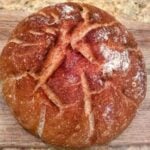
This Sourdough Artisan Bread has a crisp, golden crust and a light, airy crumb with the classic tangy flavor of naturally fermented sourdough. Made with simple ingredients and an active sourdough starter, it's a rustic homemade loaf that tastes like it came from a bakery.
- 1/4 cup sourdough starter or 1 1/2 Tbsp. dry yeast
- 2 cups warm water
- 4 cups flour
- 1 tablespoon salt
-
Preheat your oven to 450- degrees
- Whisk warm water and sour dough starter
- Add flour and salt
- Knead dough lightly on floured board
- Form into circle place in a covered bowl.
-
Let raise 8 to 10 hours or over night
-
The second raise. After the dough is almost doubled knead lightly to form a disk
- Return to bowl cover dust with flour
- Let raise for 1 hour
- Transfer dough to covered Dutch oven with the tip of a sharp knife score bread with X
- Bake covered for 30 minutes
- Uncover cook 30 minutes longer
- Cool sightly before slicing.
Make sure your sourdough starter is active and bubbly before beginning. A strong, active starter is key to achieving a good rise and an airy crumb.