Thin No-Knead Focaccia Rolls (Light &Crispy)

Thin No-Knead Focaccia Rolls (Light &Crispy)

This post may contain affiliate links, that help support this blog. If you make a purchase through these links, I may earn a commission—at no cost to you. For more information read my disclosure policy.

After years of making focaccia in restaurant kitchens, I got used to the classic version—rich with olive oil, thick, and deeply golden. But at home, I started leaning toward something simpler.

These thin focaccia rolls are exactly that.

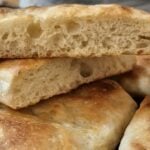
No kneading, no heavy oil, just flour, water, yeast, a touch of honey, and a technique that does all the work for you. The stretch-and-fold method builds structure without effort, creating a dough that bakes up light, slightly crisp, and incredibly versatile.

They’re thinner than traditional focaccia, a little more understated, and perfect when you want the flavor of fresh bread without the richness of a heavily oiled dough.


Things to know about this Thin No-Knead Focaccia Rolls (Light &Crispy)

What Makes These Different

  • No kneading required
  • Made with a stretch-and-fold method
  • Minimal olive oil (just a light drizzle before baking)
  • Thinner, lighter texture
  • Clean, simple ingredient list

Tips for Success)

  • This is a yeast dough—give it time to rise fully
  • No kneading needed—the folds do the work
  • Keep hands slightly damp to handle the dough easily
  • Press them thin on purpose—they will puff slightly as they bake
  • Minimal oil is intentional—this keeps them light, not rich
  • Serving Ideas
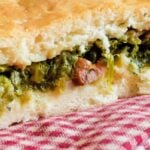
  • Perfect for light sandwiches
  • Serve warm with soup or salad
  • Tear and dip in olive oil or sauces
  • Use as an everyday bread alternative

Storage

  • Room temp: up to 2 days
  • Reheat: 350°F for 5–7 minutes
  • Freeze: up to 2 months
  • If you’re craving a thicker, more traditional version, check out my Classic Focaccia Breadit’s soft, airy, and more olive oil-forward.

    You can also pair these rolls with:

    Save this recipe, share it, and let me know how you use your focaccia rolls—I especially love seeing how you turn them into sandwiches.


Thin No-Knead Focaccia Rolls (Light, & Crispy )

These thin focaccia rolls are made with a simple yeast dough and a no-knead stretch-and-fold method. Light, crisp, and not oil-heavy—perfect for sandwiches or serving.

  • 4 cups all purpose flour
  • 2 cups warm water
  • 2 1/4 tsp active dry yeast (1 packet)
  • 2 tsp. honey
  • 2 tsp. salt
  • olive oil for drizzling before baking
  • Optional: flaky salt or herbs
  1. Activate the yeast

    In a bowl, combine warm water, honey, and yeast. Let sit 5–10 minutes until foamy

  2. Mix the dough

    Add flour and salt. Mix until a shaggy, sticky dough forms. Cover with a damp towel and let rest 10 minutes.

  3. Stretch and fold (3 rounds)

    Instead of kneading, you’ll build structure gently:

    Cover and rest 10 minutes

    Repeat this process 3 times total

    Wet your hands slightly Pull one side of the dough up and fold it over itself Rotate the bowl and repeat 3–4 times

  4. First rise

    After the final fold, cover and let rise 1–1.5 hours, until doubled.

  5. Shape into thin rolls

    Transfer dough to a lightly floured surface .Divide into 8–10 portions and gently shape. Place onto a sheet pan and press each one down so they’re thin and slightly flattened (about ½ inch thick).

  6. Second rest

    Cover loosely with the damp towel and let rest 20–30 minutes.

  7. Finish & bake

    Lightly dimple the surface with your fingertips .Drizzle just a small amount of olive oil over each roll.

    Bake at 400°F for 25 – 30 minutes, until lightly golden.

    180

Main Course
Italian
focaccia, bread, rolls


Casatiello Traditional Italian savory Easter Bread

Casatiello Traditional Italian savory Easter Bread

This post may contain affiliate links, that help support this blog. If you make a purchase through these links, I may earn a commission—at no cost to you. For more information read my disclosure policy.

Every Easter, my kitchen smells like a little slice of Naples. My mom used to make Casatiello, a rich, savory bread packed with salami, mortadella, and cheese, baked into a golden ring. There’s something about this bread—the way the dough is soft and eggy, the pockets of melted cheese, the salty bite of cured meats—that just screams Easter morning.

Casatiello has been a Neapolitan tradition for centuries. Originally, it was a celebratory bread meant to carry all the flavors of the pantry, symbolizing abundance and new life during the holiday. The eggs tucked on top? They’re not just decorative—they represent fertility and rebirth, a little Easter symbolism baked right in.

This recipe is my take on that classic, with eggs in the dough for extra richness, so every bite tastes like home and tradition.


Things to know about this Casatiello Traditional Italian savory Easter Bread

  • Adding the 3 eggs directly into the dough makes the Casatiello rich, soft, and extra tender.
  • Some families also like to nest raw eggs on top of the dough in a cross pattern before baking—this is a traditional Easter symbol representing new life and fertility. If you do this, make sure the eggs are clean and securely tucked into the dough so they bake safely.
  • Don’t skip the black pepper—it’s part of the classic flavor.
  • Cut meats and cheese into small, even cubes for better distribution.
  • Slightly overfilling is traditional—this bread is meant to be hearty and rustic.

Serving

Serve slightly warm or at room temperature. Slice into wedges and enjoy as part of your Easter spread, on an antipasto board, or alongside eggs and fresh fruit for breakfast. It’s rich, so a little goes a long way—but no one ever stops at one slice.


🧊 Storage

  • Room temperature: Wrap tightly and keep for up to 2–3 days
  • Refrigerator: Store up to 5 days
  • Freezer: Slice and freeze for up to 2 months

🔥 Reheating

  • Warm slices in a 300°F oven for 10–15 minutes
  • Or microwave for 20–30 seconds for a quick reheat
  • For best texture, avoid overheating—the cheese should be soft, not greasy
  • Want More Italian  Recipes?


Casatiello: Traditional Italian Easter Bread

Traditional Italian Casatiello made with eggs in the dough, loaded with salami, mortadella, and cheese, and baked into a golden Easter bread ring.

  • 4 cups flour (all purpose flour)
  • 1 package dry yeast (2 ¼ tsp active dry yeast)
  • 1 cup warm water
  • 1 tsp. sugar
  • 2 tsp. salt
  • 1/2 cup olive oil (or lard for traditional flavor))
  • 3 medium eggs
  • 1 tsp. Black pepper
  • 1 cup diced salami ( for the filling)
  • 1 cup diced mortadella (for the filling)
  • 1 cup diced provolone (for the filling)
  • 1 cup diced mozzarella (for the filling)
  • 1/2 cup grated pecorino Romano (for the filling)
  • 3-4 eggs raw in the shell (Optional topping)
  • Extra dough strips for crossing (Optional topping)
  1. Activate the yeast In a small bowl, combine warm water, sugar, and yeast. Let sit 5–10 minutes until foamy.

  2. Make the dough In a large bowl, mix flour, salt, and black pepper. Add the yeast mixture, olive oil, and eggs. Mix until a soft dough forms.

  3. Knead Knead for 8–10 minutes until smooth and elastic.

  4. First rise (without filling) Place dough in an oiled bowl, cover, and let rise 1–2 hours until doubled.

  5. Incorporate the filling Gently punch down the risen dough. Flatten slightly and sprinkle in the diced salami, mortadella, and cheeses. Fold and knead just enough to distribute the filling evenly without deflating the dough too much.

  6. Shape Roll into a long log and form into a ring. Place in a greased bundt or round pan.

  7. Add eggs (optional) Nestle whole eggs into the dough and secure with strips of dough in a cross.

  8. Second rise Cover and let rise 45–60 minutes until puffy.

  9. Bake Bake at 375°F (190°C) for 40–50 minutes, until golden brown. Tent with foil if browning too fast.

Appetizer
Italian
Italian, Bread< Easter, Casatiello


Italian Easter Bread (Pane di Pasqua)

Italian Easter Bread (Pane di Pasqua)This post may contain affiliate links, that help support this blog. If you make a purchase through these links, I may earn a commission—at no cost to you. For more information read my disclosure policy.

There are recipes that feel like home—and Pane di Pasqua is one of them. Soft, lightly sweet, and scented with citrus, this traditional Italian Easter bread is as symbolic as it is beautiful. The braided dough represents unity and celebration, while the colorful eggs nestled inside are a sign of new life and renewal.

This is the kind of recipe that fills your kitchen with warmth. The smell alone—yeasty, buttery, with a hint of orange—feels like Easter morning before you even take a bite.

Across Italy, every family has their own version of Pane di Pasqua—some add anise, others keep it simple with citrus. No matter the variation, it always comes back to the same idea: gathering, sharing, and celebrating.


Things to know about this Italian Easter Bread (Pane di Pasqua)recipe

  • The eggs bake right in the oven—no need to boil first.
  • Orange zest is traditional, but lemon works beautifully too.
  • The texture should be soft and rich, similar to brioche.
  • You can shape this into individual mini breads for gifting.

 Serving Suggestions

This bread is perfect:

  • With espresso on Easter morning
  • Lightly toasted with butter
  • Served alongside ricotta and honey

    Storage

    Italian Easter Bread is best enjoyed fresh, but it stores beautifully with a few simple tips.

    🥖 Room Temperature

    • Store covered or in an airtight container for up to 2–3 days
    • Keep it in a cool, dry place
    • For best texture, wrap in plastic wrap or foil to prevent it from drying out

    🧊 Refrigerator

    • Not recommended—this will dry the bread out faster

    ❄️ Freezing

    • Do not freeze with the eggs in the bread (remove them first or bake without)
    • Wrap the bread tightly in plastic wrap and foil, or place in a freezer-safe bag
    • Freeze for up to 2 months

    🔥 Reheating

    • Thaw at room temperature
    • Warm in a 300°F oven for 10–15 minutes to refresh the texture

    💬 Final Thoughts

    If you’ve never made Italian Easter bread from scratch, this is your year. It’s simple, deeply traditional, and incredibly rewarding. Once you pull that golden braid out of the oven, you’ll understand why this recipe has stood the test of time.


    🔗 More Easter Recipes You’ll Love


Italian Easter Bread (Pane di Pasqua)

Soft, lightly sweet, and beautifully braided, this classic Italian Easter Bread is flavored with citrus and topped with colorful eggs—an easy, traditional recipe perfect for your holiday table.

  • 4 cups flour
  • 1 cup sugar
  • 1 package active dry yeast (2-3 tsp.)
  • 1 cup milk (warmed)
  • 2 large eggs
  • 1/2 cup butter (melted)
  • 1 Tbsp orange zest
  • 4 -6 medium eggs (raw and dyed)
  • 1 medium egg (for egg wash)
  • 1 Tbsp. sprinkles (Optional)
  1. Activate the Yeast

    In a small bowl, combine warm milk and yeast. Let it sit until foamy—about 5–10 minutes.

  2. Make the Dough

    In a large bowl, mix flour, sugar, and salt. Add eggs, melted butter, vanilla, orange zest, and the yeast mixture. Stir until a soft dough forms.

  3. Knead

    Turn onto a floured surface and knead for 8–10 minutes, until smooth and elastic.

  4. First Rise

    Place in a greased bowl, cover, and let rise until doubled in size (about 1–1.5 hours).

  5. Shape the Bread

    Divide the dough into ropes and braid. Form into a round wreath or loaf. Gently nestle the dyed eggs into the dough.

  6. Second Rise

    Cover and let rise again for 30–45 minutes.

  7. Bake

    Brush with egg wash, add sprinkles, and bake at 350°F (175°C) for 25–30 minutes until golden brown.

Dessert
Italian
Easter, bread, Italian


Italian Broccoli Rabe Pizza

Italian Broccoli Rabe Pizza

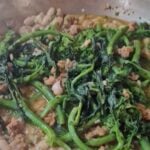
In Southern Italy, pizza is often simple. It starts with good dough, olive oil, and what is in season. Italian broccoli rabe pizza (Cime di rapa), is a common topping and is loved for its slightly bitter flavor.

This is the kind of pizza I make at home. After many years working in restaurant kitchens, I learned that Italian cooking does not need a lot of ingredients. It needs balance. For this pizza, Italian sausage adds flavor, while cannellini beans make it hearty without feeling heavy.

Everything is cooked together in one pan before going on the pizza. The result is a rustic, olive oil–based pizza that is simple, comforting, and very Italian.

Things to know about this Italian Broccoli Rabe Pizza

  • Blanching the broccoli rabe matters
    A quick blanch removes excess bitterness while keeping its signature flavor intact.

  • Everything cooks in one pan
    Cooking the garlic, sausage, broccoli rabe, and cannellini beans together allows the flavors to layer naturally—no need to remove ingredients or overcomplicate the process

  • Cannellini beans are traditional, not modern
    Beans have long been used in Southern Italy to stretch meals and add body. Lightly mashing a few into the pan creates a natural creaminess without sauce.
    (If you enjoy beans on pizza, you may also like my Italian Escarole and Beans with Sausage post.)

  • Minimal cheese is intentional
    This pizza is olive-oil based. If you use cheese, keep it light—just enough to enhance, not dominate.
    (For dough texture that works best with oil-based toppings, use my over night Pizza Dough Recipe

Italian Broccoli Rabe Pizza

Serves: 2–4
Prep Time: 15 minutes
Cook Time: 12–15 minutes
Ingredients

  • 1 lb. (450 g) broccoli rabe, trimmed

  • 2–3 tbsp olive oil, plus more for brushing

  • 3 cloves garlic, thinly sliced

  • 1/2  tsp red pepper flakes (optional)

  • 6 oz (170 g) Italian sausage, casings removed

  • ½ cup cannellini beans, drained and rinsed

  • Salt, to taste

  • 12 oz (340 g) pizza dough (homemade or store-bought — use my [Pizza Dough Recipe] for best results)

1–2 tbsp grated Pecorino Romano

Instructions

1. Blanch the Broccoli Rabe

Bring a pot of salted water to a boil.
Blanch broccoli rabe 2–3 minutes until bright green.
Drain well and gently squeeze out excess water.


2. Build the Topping 

Heat olive oil in a skillet over medium heat.
Add garlic and red pepper flakes; sauté 30–60 seconds until fragrant.

Add sausage directly to the pan and cook, breaking it up, until browned and cooked through (5–6 minutes).

Add broccoli rabe and cannellini beans directly into the same pan.
Toss and sauté 2–3 minutes, lightly mashing a few beans so they cream into the oil and sausage fat.
Season lightly with salt. Remove from heat.

3. Prepare the Dough

Preheat oven to 500°F (260°C) with a pizza stone or baking sheet inside.
Stretch dough into a 12-inch round on parchment paper.
Brush lightly with olive oil.


4. Assemble

Evenly distribute the broccoli rabe, sausage, and bean mixture over the dough.
Optional: finish with a very light sprinkle of Pecorino Romano.
Drizzle with a touch more olive oil.


5. Bake

Slide pizza onto the hot stone or pan.
Bake 12–15 minutes, until crust is golden and crisp.
Rest 2–3 minutes before slicing.


Pizza di Scarola: Classic Italian Savory Escarole Pie

Pizza di Scarola: Classic Italian Savory Escarole Pie

Pizza di Scarola is a classic Italian savory pie filled with tender escarole, garlic, olives, capers, and anchovies, all wrapped in soft pizza dough. Rooted in Neapolitan cooking, this humble dish has been made for generations using simple pantry ingredients and seasonal winter greens.

Traditionally, Pizza di Scarola is prepared during the Christmas season and enjoyed through Epiphany, when Italian families gather to mark the close of the holidays. Its balance of bitter greens and savory flavors reflects both the season and the rhythm of Italian home cooking, making it a recipe that feels just as comforting today as it did centuries ago.

Often served warm or at room temperature, this savory pie is meant to be shared—whether as part of a holiday table or as a simple, satisfying meal any time of year.

Things to know about this Pizza di Scarola: Classic Italian Savory Escarole Pie

  • Escarole is traditional. Its mild bitterness balances the salty olives, capers, and anchovies that define this classic pie.

  • Substitute greens, if needed. While escarole is the authentic choice, endive, broccoli rabe, Swiss chard, or spinach can be used when escarole isn’t available. Always blanch and squeeze the greens very dry to prevent a soggy filling.

  • Anchovies melt into the filling. They don’t make the pie taste fishy—just deeply savory. You can omit them if preferred, but they are traditional.

  • Make it ahead. Pizza di Scarola is often prepared in advance and served warm or at room temperature. In fact, the flavors improve after resting.

  • Use pizza dough, not pastry. This is a bread-style pie, not a puff pastry tart—keeping it rustic and true to its Neapolitan roots.

  • Serve Pizza di Scarola as part of an Italian spread alongside a simple citrus salad, a bowl of Italian wedding soup, or one of my easy Italian cookies for dessert. It also pairs beautifully with other traditional recipes often served during the holiday season or for casual family meals.

    👉 Be sure to explore:

Pizza di Scarola (Italian Escarole Pie)

Serves: 6–8
Prep Time: 30 minutes
Cook Time: 40–45 minutes
Total Time: About 1 hour 15 minutes

Ingredients

For the dough

  • 1 lb pizza dough (store-bought or homemade), at room temperature

  • Extra virgin olive oil, for brushing

For the escarole filling

  • 2 large heads escarole, washed and chopped

  • 3 tbsp extra virgin olive oil

  • 3 cloves garlic, sliced

  • 4 anchovy fillets, chopped (optional but traditional)

  • ½ cup pitted Gaeta or Kalamata olives, chopped

  • 2 tbsp capers, rinsed and drained

  • 2 tbsp pine nuts (optional)

  • 2 tbsp raisins (optional, traditional sweet-salty touch)

  • Salt and black pepper, to taste

  • Red pepper flakes (optional)

  • Instructions

  • Prepare the escarole
    Bring a large pot of salted water to a boil. Add the escarole and blanch for 3–4 minutes until just tender. Drain well and squeeze out excess water. Set aside.

  • Cook the filling
    In a large skillet, heat olive oil over medium heat. Add garlic and sauté until fragrant. Stir in anchovies and let them melt into the oil.
    Add escarole, olives, capers, pine nuts, and raisins. Season lightly with salt, black pepper, and red pepper flakes. Cook for 5–7 minutes until well combined and flavorful. Let cool slightly.

  • Assemble the pie
    Preheat oven to 375°F (190°C). Lightly oil a 9–10 inch round baking pan.
    Divide dough into two pieces, one slightly larger than the other. Roll out the larger piece and line the pan, letting excess hang over the sides.
    Fill with escarole mixture. Roll out remaining dough and place on top. Seal and crimp edges. Prick the top with a fork and brush lightly with olive oil.

  • Bake
    Bake for 40–45 minutes, or until golden brown and cooked through.
    Let rest at least 20 minutes before slicing. Traditionally served warm or at room temperature.


4-Ingredient Homemade Italian Baguettes

4-Ingredient Homemade Italian Baguettes

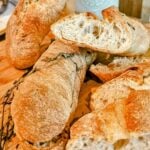
I first made these Italian baguettes with my sourdough starter, but this version using dry yeast is just as delicious—and so much quicker. It’s perfect for people who don’t have access to a starter but still want that classic, crusty Italian bread at home. With just four simple ingredients—flour, water, yeast, and salt—you can bake fresh, rustic baguettes that are crisp on the outside and soft on the inside. Ideal for sandwiches, cheese boards, or dipping in olive oil.

Things to know about this 4-Ingredient Homemade Italian Baguette recipe

The dough is simple and forgiving, perfect for beginners.

Make sure your water is warm—not hot—so the yeast activates properly.

A long rise helps develop flavor, but you can speed it up in a warm kitchen. Scoring the dough before baking helps it expand beautifully in the oven.

For an extra crispy crust, bake with steam by adding a pan of hot water to the oven. And don’t skip the cooling time—cutting too soon can make the inside gummy.

With just four simple ingredients and a few easy steps, you can bake a delicious, crusty Italian baguette right at home. This recipe is perfect for beginners and delivers bakery-quality results with minimal effort. Give it a try and let me know your experience. I love hearing from you . It’s my favorite part!!! Here is a link to my sour dough  Artisan bread recipe

You said:

Italian Baguettes with Dry Yeast

Yields: 2–3 baguettes
Prep Time: 20 minutes
Rise Time: 2½–3 hours total
Cook Time: 25–30 minutes
Total Time: ~3½ hours

Ingredients:

  • 2 cups warm water (about 110°F)

  • 2¼ teaspoons active dry yeast (1 packet)

  • 4 cups all-purpose or bread flour

  • 1 tablespoon salt

Instructions:

  1. Activate the Yeast:
    In a large mixing bowl, whisk the warm water and dry yeast together. Let it sit for 5–10 minutes until foamy.

  2. Make the Dough:
    Add the flour and salt to the yeast mixture. Stir until a shaggy dough forms.

  3. Knead:
    Transfer the dough to a floured surface and knead lightly for about 3–5 minutes until smooth.

  4. First Rise:
    Shape the dough into a ball and place it in a lightly floured bowl. Cover with a clean towel or plastic wrap. Let rise at room temperature for about 1½ to 2 hours, or until doubled in size.

  5. Shape the Baguettes:
    Gently punch down the dough and divide it into 2 or 3 portions. Shape each into a baguette by flattening the dough into a rectangle, then rolling it up tightly and tapering the ends.

  6. Second Rise:
    Place the shaped loaves on a parchment-lined baking sheet or baguette pan. Cover lightly and let rise for another 45 minutes to 1 hour, until puffy.

  7. Score the Loaves:
    Preheat your oven to 450°F. Just before baking, use a sharp knife or lame to make 3–4 diagonal slashes across each baguette.

  8. Bake with Steam:
    Place the baguettes in the oven. For a crusty exterior, add a small pan of hot water to the bottom of the oven or mist the inside with water. Bake for 25–30 minutes until golden brown and hollow-sounding when tapped.

  9. Cool:
    Let the baguettes cool slightly on a wire rack before slicing.